
Hair loss in pets can be easy to dismiss at first, especially during shedding season, but bald patches, thinning fur, or sudden overgrooming often mean more than a cosmetic change. In dogs and cats, hair loss, also called alopecia, is a sign that something may be affecting the skin, coat, or overall health. The cause can range from parasites and allergies to infections, hormonal disease, pain, or self-trauma from licking and chewing.
One of the most important things to know is that hair loss is not a diagnosis by itself. It's a clue. Alopecia is a sign that the underlying cause needs to be identified for treatment to be successful. That's why it helps to pay attention not only to where the hair loss is happening, but also whether your pet is itchy, licking, scaly, or showing any other changes or signs of discomfort at home.
What Hair Loss in Pets Can Look Like
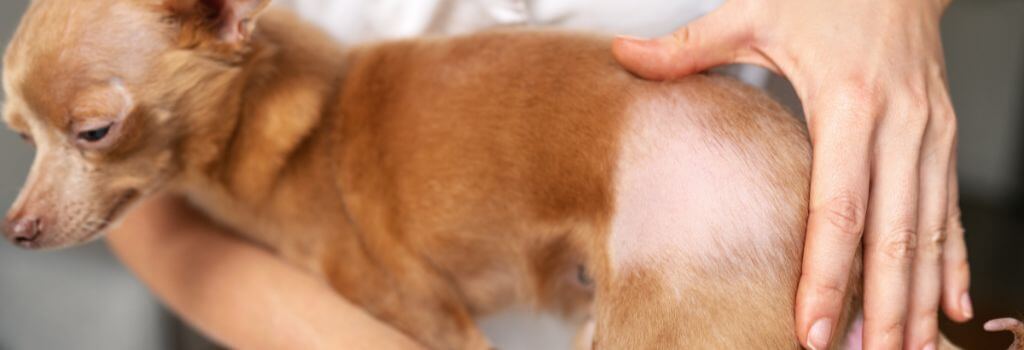
Hair loss doesn't always look the same from one pet to another. Some pets develop one or two small bald patches, while others have more widespread thinning over the body, broken hairs, or areas where the coat looks moth-eaten or uneven. In itchy pets, the hair loss may be caused partly by scratching, chewing, rubbing, or overgrooming rather than the skin disease alone.
When it comes to hair loss in pets, the pattern matters.
- Hair loss around the tail base, rump, and back legs may raise concern for flea allergy.
- Circular or patchy areas can be seen with infections, mites, or localized irritation.
- Symmetrical thinning on both sides of the body may sometimes point toward an endocrine problem, especially if the pet is not very itchy.
- In cats, a slick-looking bald area on the belly or inner legs may actually be caused by excessive licking, even when owners do not catch the cat doing it.
Common Causes of Hair Loss in Dogs and Cats
There are many possible reasons a pet may lose hair, which is why a veterinary exam is so important. Parasites are one of the most common causes. Fleas can trigger severe itching, especially in pets with a flea allergy, and mites can lead to hair loss, inflammation, crusting, or secondary skin infection. Even when fleas are hard to find, flea allergy can still be a major driver of skin disease. Allergies are another common cause. Dogs and cats may develop skin inflammation related to fleas, food allergy, or environmental allergens. These pets are often itchy, and the hair loss may come from repeated scratching, licking, chewing, or rubbing.
Infections can also lead to alopecia. Bacterial skin infections may cause crusting, redness, odor, bumps, or patchy thinning. Fungal infections, such as ringworm, can create areas of hair loss and scaling and are especially important because ringworm can spread to other pets and people. Some pets also develop secondary infections after allergies or parasites damage the skin barrier. Hormonal and metabolic diseases may affect the coat as well. In dogs, hypothyroidism and hyperadrenocorticism can sometimes cause thinning hair, poor coat quality, or slower regrowth, often without the same degree of itching seen in allergic skin disease. These cases may also come with weight changes, skin darkening, recurrent infections, or other body-wide signs that help point toward a broader internal problem.
Overgrooming, Stress, and Self-Trauma
Not all hair loss starts with a problem in the hair follicle itself. Some pets remove their own hair by licking, biting, or chewing because the skin feels itchy or painful. This is especially common in cats. A cat may appear to have mysterious bald areas on the abdomen, legs, or flanks, but the real issue may be overgrooming triggered by fleas, allergies, pain, or another medical cause. Behavior can play a role too, but it should be approached carefully. Stress-related overgrooming is possible, especially in cats, yet it is considered a diagnosis of exclusion. In other words, medical causes such as parasites, itch, pain, and infection usually need to be ruled out first. Because excessive grooming can be tied to either physical or psychological causes, these cases often need a thorough workup rather than assumptions.
Questions to Ask That Help Narrow Down the Cause
- Is your pet itchy, chewing, rubbing, or scratching?
- Are the bald spots patchy, symmetrical, scaly, or inflamed?
- Did the problem start suddenly or develop gradually?
- Are there any changes in appetite, energy, weight, or drinking habits?
- Have there been recent changes in diet, environment, stress, or parasite prevention?
How Veterinarians Diagnose Hair Loss in Pets
Because alopecia has so many possible causes, diagnosis usually involves more than a quick look at the coat. Your veterinarian will start with a detailed history and physical exam, paying close attention to the distribution of hair loss, whether the skin is inflamed, and whether your pet appears itchy or uncomfortable. Details about seasonality, indoor or outdoor exposure, parasite control, and how long the problem has been going on can all help guide the next steps. Testing may include skin scrapings, hair examination, fungal culture or PCR testing for ringworm, cytology to look for infection, flea combing, and, in some cases, bloodwork or endocrine testing. Allergy workups and elimination diet trials may also be recommended depending on the pattern. The goal is not only to confirm what is causing the hair loss, but also to identify any secondary problems, such as infection or self-trauma, that may need treatment at the same time.
Treatment for Pet Hair Loss Depends on the Underlying Problem
There is no single treatment for pet hair loss because the cause determines the plan. Parasites need appropriate parasite control. Bacterial or yeast infections may need topical or oral medication. Ringworm requires treatment and environmental attention because it can be contagious. Allergic pets often need a broader long-term strategy that may include flea prevention, diet changes, itch control, and skin barrier support.
When endocrine disease is involved, treating the hormonal problem is often the most important step. If the pet is overgrooming because of pain, the pain source needs attention. If stress is contributing, environmental changes may also become part of the plan. Hair regrowth can take time, even after the cause is identified, so improvement is not always immediate. The biggest priority is getting the skin comfortable and stopping ongoing hair loss while the body has time to recover.
When Hair Loss in Dogs and Cats Should Be Checked Promptly
Any persistent or unexplained hair loss is worth bringing up with your veterinarian, but some situations deserve faster attention. That includes sudden widespread thinning, severe itching, open sores, crusting, odor, skin darkening, weight loss, lethargy, or signs that other pets or people in the home may be developing skin lesions. Ringworm, mange, flea allergy, and skin infection can all worsen if treatment is delayed.
Early evaluation often makes these cases easier to manage. Hair loss may begin as a skin issue, but it can also be one of the first visible signs of a broader health concern. Paying attention to coat changes, itch, grooming habits, and overall well-being helps your veterinary team find the cause and build the right treatment plan for your pet. If you have questions, we would love to answer them for you. Please give us a call at the office at (765) 482-7387, or you can email us at [email protected]. Our staff would love to talk with you!
Don't forget to follow us on social media Facebook, Instagram.